

Natural Blood Thinners: Foods and Nutrients at a Glance
Many people are looking for natural ways to support healthy blood flow. Diet plays an important role, as a variety of foods may influence blood pressure, circulation, and the body's normal blood clotting processes.
In this article, you'll learn what is actually meant by the term "natural blood thinners," which foods are commonly associated with this topic, and why they cannot replace prescribed blood-thinning medications.
We'll also introduce dietary supplements from the Heilnatura range that are frequently chosen by people looking to support their cardiovascular health and maintain an active lifestyle.

Why Thin the Blood at All?
Blood performs numerous vital functions throughout the body. It transports oxygen and nutrients to the organs, supplies cells with essential substances, and helps remove metabolic waste products. At the same time, it plays a crucial role in blood clotting, helping to protect the body from excessive blood loss.
However, when changes occur within the cardiovascular system, such as elevated blood lipid levels, plaque buildup in the arteries, or the formation of blood clots, the risk of conditions such as thrombosis and other vascular diseases may increase. For this reason, many people search for natural blood thinners and wonder which foods may help support healthy blood flow.
What Does "Natural Blood Thinners" Mean?
The term "natural blood thinners" is widely used, but it is not entirely accurate from a medical perspective. Natural foods and dietary supplements do not actually thin the blood. Instead, the term generally refers to foods and nutrients that are associated with supporting normal cardiovascular function and healthy circulation.
Prescription blood thinners work by directly affecting the body's blood-clotting process and are used to help prevent or treat blood clots, strokes, and other cardiovascular conditions.
Natural foods cannot replace these medications. In particular, if you are already taking prescription blood thinners, they should only be used after consulting your healthcare provider, as interactions may occur. However, a balanced diet can make an important contribution to maintaining healthy blood vessels.

What Supports Healthy Blood Flow? Foods at a Glance
Certain foods and plant-based compounds are often associated with supporting healthy circulation and cardiovascular health. This is not about medically "thinning" the blood, but rather about naturally occurring plant compounds such as flavonoids and antioxidants, which may support various processes within the body. Many of our customers choose our antioxidant supplements, such as our OPC Drops, to supplement their intake of valuable plant compounds.
Omega-3 Fatty Acids
Omega-3 fatty acids contribute to the normal function of the heart and are often highlighted as part of a balanced diet. They are naturally found in foods such as nuts, salmon, and flaxseeds. Those looking for additional support can choose our vegan Omega-3 Drops.

Herbs and Spices
Certain herbs and spices may also help support healthy circulation. For example, cayenne pepper is often associated with supporting healthy arteries and blood vessels, while garlic contains allicin, a naturally occurring compound that has been studied for its potential effects on blood clotting. Ginger may also influence the production of thromboxane, while turmeric, through its active compound curcumin, has been investigated for its potential role in reducing platelet aggregation. Cinnamon and certain berries also contain naturally occurring plant compounds that are of interest in nutritional science.

Vegetables and Fruits
Many fruits and vegetables contain naturally occurring plant compounds such as salicylates. Citrus fruits are also rich in vitamin C, which contributes to the normal function of blood vessels. Red grapes contain resveratrol, a compound that has been studied for its potential effects on platelet function. Watermelon, fermented soybeans, mushrooms, and olives are also frequently mentioned as part of a heart-healthy diet.
In this context, many people who wish to support their cardiovascular health also choose our Nattokinase Capsules or our Nattokinase Complex with vitamin D3 and K2 MK7. You can learn more about the effects of nattokinase in our dedicated blog article.
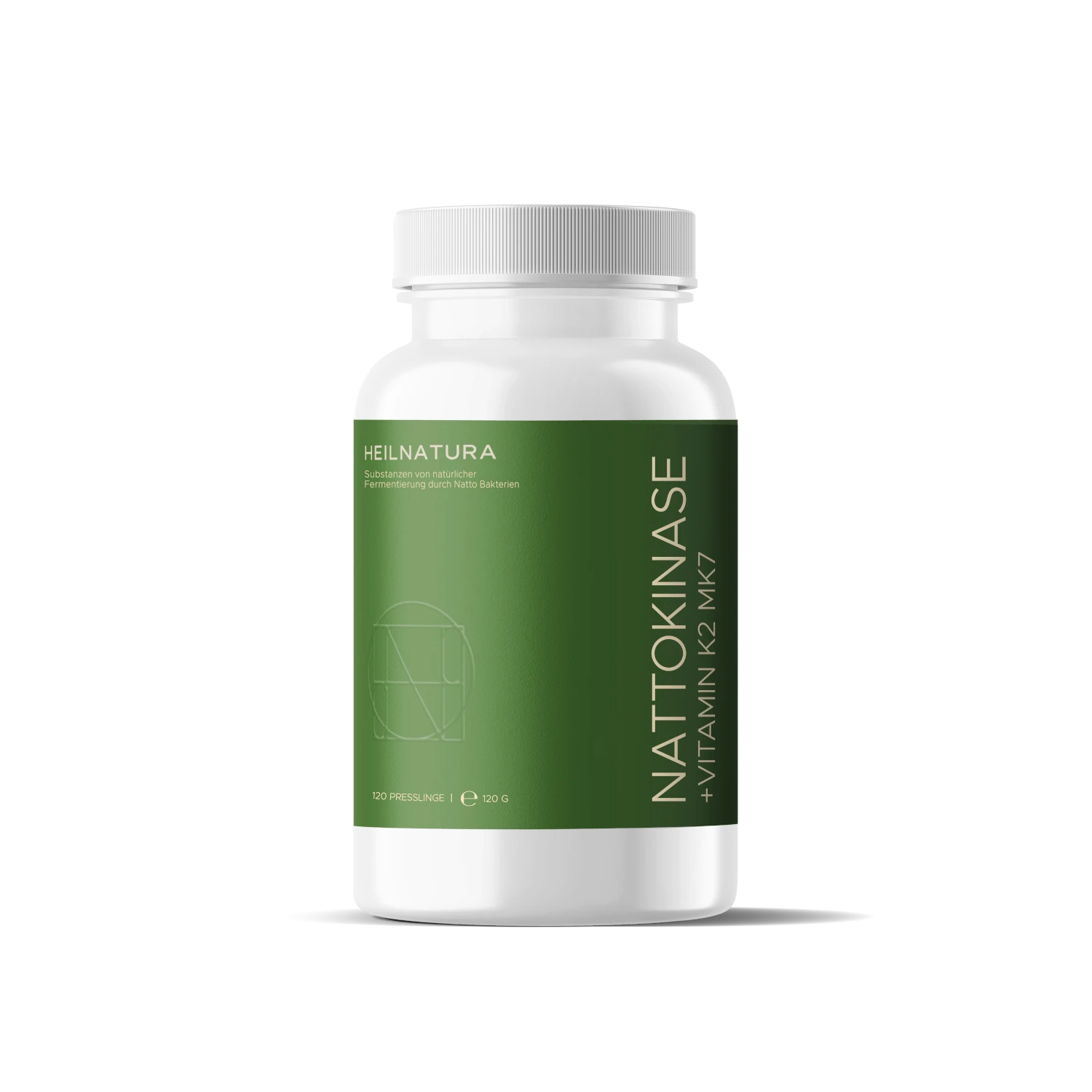
Bio Nattokinase Kapseln
120 Presslinge · 1.400–1.600 FU je Pressling
Sofort lieferbar · Versand heute

Foods Rich in Vitamin E
Vitamin E is naturally found in foods such as almonds, sunflower seeds, and plant-based oils. It helps protect cells from oxidative stress. To further support daily vitamin E intake, many people also choose our Vitamin E Drops, especially if their diet contains only limited amounts of natural vitamin E sources.

„Dieses Produkt ist Spitze und ist sehr gut verträglich. Ein hervorragender pflanzlicher Blutverdünner.“
„Schnelle Lieferung. Sehr gut verträglich. Super finde ich, dass kein unnötiger Überzug und damit verbunden auch keine weiteren Stoffe verwendet werden, die man nicht im Körper haben will […]“
„Ich nehme jeden Tag einen Pressling und fühle mich gut, keine Nebenwirkungen. Es hat auch einen angenehmen Geschmack.“
„Ich mache jetzt schon das zweite Mal einen 4-wöchigen Zeitraum zur Vorbeugung. vertrage es super und meine eine bessere Durchblutung zu spüren.“
„Nehme es jetzt seit mehr als eine Woche und bin sehr zufrieden. Werde auf jeden Fall nachbestellen.“
„Die Bestellung wurde super schnell und gut verarbeitet und versendet. Die Dosierung mit D3 gefällt uns sehr gut.“
Natural Blood Thinners: What Should You Keep in Mind?
Blood clotting is a vital protective mechanism that helps the body quickly seal injuries and prevent excessive blood loss. In medical practice, values such as the prothrombin time (Quick value) are used to assess the blood's clotting ability and are typically within the normal range in healthy individuals.
If the blood is considered "too thick" or has an increased tendency to clot, the risk of blood clot formation may rise. However, it is equally important to understand that reducing the blood's ability to clot too much can also pose risks. Both prescription blood thinners and certain natural foods and dietary supplements may influence blood clotting and therefore increase the risk of bleeding.

For this reason, it is particularly important before planned surgery or other medical procedures to carefully review which supplements or foods have been consumed beforehand. Even so-called "natural blood thinners" should not be underestimated in this context and should always be discussed with your healthcare provider if in doubt.
What Else Can Help Support Healthy Blood Flow?
In addition to certain foods and nutrients, lifestyle also plays an important role in blood properties and overall cardiovascular health. In particular, regular physical activity can help promote healthy blood flow and improve circulation.
Exercise supports the entire circulatory system, improves oxygen delivery to the body's tissues, and helps maintain healthy metabolic processes. Adequate hydration is equally important, as insufficient fluid intake can make the blood appear more concentrated.

In addition, maintaining a healthy body weight, avoiding nicotine, and leading an overall active lifestyle are considered important factors in supporting normal blood viscosity and healthy blood vessel function.

- 100 % fermentiertes Natto mit natürlichem Vitamin K2 MK7
- Spermidin, Isoflavone, Vitamin B9, Phosphor, Eisen
- Für alle, die Vitamin D bereits separat einnehmen

- Zusätzlich 25 µg Vitamin D3 (1000 IE) aus Meeresalgen
- D3 und K2 MK7 für Immunsystem, Muskeln und Knochen
- Zwei Präparate in einem Pressling – eine Einnahme am Tag
Quellen & weiterführende Informationen
Für diesen Ratgeber wurden insbesondere Informationen von öffentlichen Gesundheitsinstitutionen, medizinischen Leitlinien, der Europäischen Behörde für Lebensmittelsicherheit (EFSA) sowie wissenschaftlichen Übersichtsarbeiten und Studien aus PubMed herangezogen.
-
gesund.bund.de: Thromboseneigung (Thrombophilie)
Informationen zur Blutgerinnung, Thromboseneigung, Entstehung von Blutgerinnseln und möglichen Risikofaktoren.
gesund.bund.de – Thromboseneigung (Thrombophilie) -
gesund.bund.de: Gerinnungsstörungen
Informationen zur Funktion der Blutgerinnung, zu Gerinnungsstörungen, Blutungsneigung, Thrombosen und gerinnungshemmenden Medikamenten.
gesund.bund.de – Gerinnungsstörungen -
European Food Safety Authority (EFSA): EPA, DHA und normale Herzfunktion
Wissenschaftliche Bewertung gesundheitsbezogener Aussagen zu Omega-3-Fettsäuren, darunter EPA und DHA und deren Beitrag zur Aufrechterhaltung einer normalen Herzfunktion.
EFSA Journal – EPA, DHA and maintenance of normal cardiac function -
PubMed: Knoblauch und Blutplättchenaggregation
Systematischer Review randomisierter kontrollierter Studien zum möglichen Einfluss von Knoblauch auf die Aggregation von Blutplättchen. Die Autoren weisen auf die begrenzte und heterogene Studienlage hin.
PubMed – Garlic supplementation and platelet aggregation -
PubMed: Ingwer und Blutplättchenaggregation
Systematische Übersichtsarbeit zu klinischen und beobachtenden Studien über den möglichen Einfluss von Ingwer auf die Aggregation von Blutplättchen. Die Ergebnisse der untersuchten Studien waren uneinheitlich.
PubMed – The Effect of Ginger on Platelet Aggregation -
PubMed: Curcumin und Blutplättchen
Wissenschaftliche Übersichtsarbeit über untersuchte Einflüsse von Curcumin auf Aktivierung und Aggregation von Blutplättchen sowie zugrunde liegende Mechanismen.
PubMed – Regulatory Effects of Curcumin on Platelets -
PubMed: Pflanzenstoffe und Funktion der Blutplättchen
Wissenschaftlicher Überblick über verschiedene Pflanzenstoffe wie Curcuminoide, Resveratrol und Flavonoide und deren untersuchten Einfluss auf Signalwege und Aktivierung von Blutplättchen.
PubMed – Nutrition Phytochemicals Affecting Platelet Signaling and Responsiveness -
European Food Safety Authority (EFSA): Vitamin C und Kollagenbildung
Wissenschaftliche Bewertung gesundheitsbezogener Aussagen zu Vitamin C, darunter dessen Beitrag zu einer normalen Kollagenbildung und damit zur normalen Funktion der Blutgefäße.
EFSA Journal – Vitamin C and collagen formation -
European Food Safety Authority (EFSA): Vitamin E und oxidativer Stress
Wissenschaftliche Bewertung des Zusammenhangs zwischen der Aufnahme von Vitamin E und dem Schutz von Zellbestandteilen vor oxidativen Schäden.
EFSA – Vitamin E and protection from oxidative damage -
PubMed: Nattokinase und Gerinnungs- beziehungsweise Fibrinolyseparameter
Kleine randomisierte, doppelblinde und placebokontrollierte Cross-over-Studie mit 12 gesunden Männern zum kurzfristigen Einfluss einer Einzeldosis Nattokinase auf verschiedene Laborparameter der Gerinnung und Fibrinolyse.
PubMed – A single-dose of oral nattokinase potentiates thrombolysis and anti-coagulation profiles -
AWMF: S3-Leitlinie zur Prophylaxe der venösen Thromboembolie (VTE)
Evidenz- und konsensbasierte medizinische Leitlinie zur Einschätzung des Risikos venöser Thromboembolien und zur risikoadaptierten Thromboseprophylaxe, unter anderem bei Operationen und anderen medizinischen Risikosituationen.
AWMF – S3-Leitlinie Prophylaxe der venösen Thromboembolie -
Deutsche Gesellschaft für Ernährung (DGE): Wasser
Informationen zur Bedeutung von Wasser für den Körper sowie zu Referenzwerten und einer regelmäßigen Flüssigkeitszufuhr.
dge.de – Wasser


